Downspout Drainage in Newberry FL: How to Move Roof Water Away From the Foundation
A gutter system does not really earn its keep at the roofline. It earns it on the ground.
That is the part many homeowners in and around Newberry notice only after a problem shows up. A splash mark on the wall. Soil washed out under a flower bed. Mulch piled against the slab after a hard summer storm. Water sitting too close to the house for too long. The gutters may be catching roof runoff just fine, but if the downspouts dump that water in the wrong place, the whole system falls short.
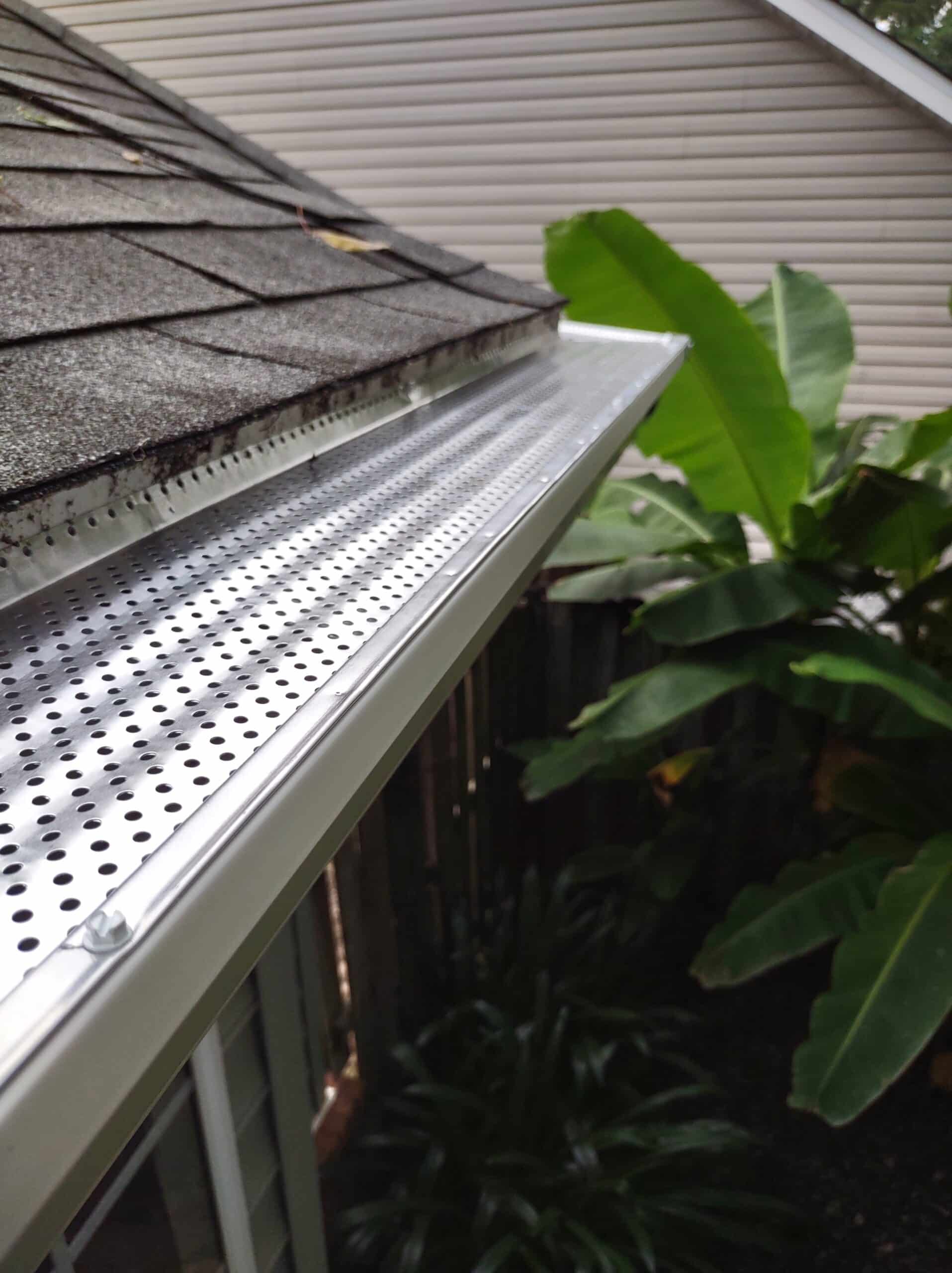
In this part of Florida, that matters. Summer rain can come fast, tropical weather can stack wet days together, and clogged drainage paths can turn a routine storm into a mess in one afternoon. UF/IFAS guidance for Florida storm preparation specifically warns that gutters and storm drains can clog with needles, leaves, and other debris, and recommends clearing them before heavy weather. That advice sounds simple because it is simple, but it is also one of the most overlooked parts of protecting a house.
The goal is not complicated. Roof water should be collected, moved, and released where it can drain away instead of soaking the area right next to the foundation. The challenge is that every home handles water a little differently. Roof area, gutter size, number of downspouts, grade, landscaping, tree cover, and maintenance habits all affect what works.
What “good” downspout drainage actually looks like
A lot of people think the job is done once water disappears into a downspout. In practice, that is only the midpoint.
Good downspout drainage means the runoff leaves the roof edge, travels through gutters without overflowing, moves down the vertical leaders without backing up, and ends up discharging in a place where it keeps moving away from the house. If any part of that chain breaks, water starts doing what gravity wants, which is spreading across the nearest low spot and finding the easiest path. Too often, that path leads back toward the foundation.
You can usually tell a lot about a drainage setup right after a strong rain. If the downspout outlet churns a muddy hole in the soil, if mulch washes into the walkway, or if water lingers near the wall, the system is not directing runoff far enough away or cleanly enough away. That does not always mean the gutters are wrong. Sometimes the issue is only the last few feet.
This is where people in Newberry run into a common misconception. They focus on the visible gutter profile, whether it is decorative or seamless or new, but the unseen result matters more than the look. A well-installed run of aluminum gutters Central Florida homeowners rely on can still underperform if the downspout discharges into a flat bed with nowhere to go.

Florida rain changes the stakes
A mild climate does not mean mild water management.
Florida homes deal with periods of intense rainfall, and that can overwhelm a neglected system quickly. During storm season, a partially clogged gutter may seem acceptable during light rain and then suddenly spill over during a heavy downpour. Pine needles, oak leaves, acorns, and other debris are more than a nuisance here. UF/IFAS notes that leaves and organic debris should be kept out of gutters and storm drains, and it specifically points to live oak leaves and acorns as contributors to stormwater pollution when runoff carries them away.
That environmental point is worth pausing on because it connects directly to house maintenance. When debris builds up in gutters and downspouts, two things happen at once. First, water has less room to flow where it should. Second, the eventual overflow can wash that debris off the roof edge, through the yard, and toward storm drains or low areas. What looks like a small maintenance issue at the eave becomes both a drainage problem and a runoff problem on the ground.
That is also why gutter cleaning Fruitland Park FL homeowners talk about, or gutter repair Wildwood FL homeowners schedule after storms, is not just cosmetic upkeep. It is part of managing where stormwater goes and what it carries with it.
The downspout is only as good as the outlet
The most important question is also the most practical one: where does the water land?
If it lands right at the base of the wall, the answer is easy. That needs improvement. If it lands on a hard surface and runs back toward the home, that needs improvement too. The ideal discharge area slopes away and lets water disperse without erosion. The exact method can vary, but the principle does not.
On some homes, a simple extension may be enough to carry water past the zone that stays saturated. On others, the downspout may need to connect to a more deliberate drainage path. The right approach depends on how much roof water is feeding that outlet and how the lot behaves in real storms. A front corner that handles one side of a small porch roof is not the same as a rear corner catching a broad roof plane.
That is one reason broad advice about gutters often disappoints homeowners. It skips the roof-to-ground relationship. You cannot judge downspout drainage only by looking upward. You have to walk the perimeter, study where splash marks appear, and see how the yard responds when water arrives all at once.
Why sizing and layout matter more than people expect
Homeowners often ask about gutter sizes for Florida homes when what they really mean is, “Why is water still pouring over the edge?” That question has several possible answers, and size is only one of them.
Florida building code materials make an important point here. Gutters and downspouts are supposed to be sized and discharged in accordance with the Florida Building Code and Plumbing provisions, and exterior gutters and leaders should be made of metal or approved plastic and secured with corrosion-resistant fasteners. The takeaway for a homeowner is not that you need to memorize code tables. It is that size and discharge are not guesswork. They are part of a system.
A gutter can be too small for the volume it serves. It can also be installed with too few downspouts, placed so water has too long a run before it exits, or clogged enough that capacity no longer matters. Even a suitable profile can fail if debris creates a dam. In some neighborhoods, people ask specifically about K-style gutters Lady Lake FL installers commonly use, or about seamless gutters Ocala FL companies promote, because those options are familiar and widely available. Those products may be appropriate, but the profile alone does not solve drainage. The outlet planning still has to be right.
Material choice matters for longevity and fastening, but it does not erase design mistakes. Aluminum gutters Central Florida homeowners choose are popular for good reason, but aluminum still needs proper pitch, secure attachment, and clear discharge paths to perform well in rainy weather.
The debris problem in tree-heavy yards
If your property has pines or live oaks nearby, your drainage plan has to account for that reality instead of pretending it is not there.
Pine needles are especially troublesome because they do not always create a dramatic clog at first. They can lie flat, tangle together, and collect in downspout openings or corners. Oak leaves and acorns create their own kind of slowdown. A gutter might still appear to drain during a quick test with a hose, then struggle during a real storm when every section receives runoff at once.
This is why gutter guards for pine needles Florida homeowners consider deserve a careful, case-by-case look. Guards can reduce the volume of debris entering the trough, but no guard makes a gutter maintenance-free. In practice, debris can still collect on top of guards, around valleys, or near the outlet. A system that is sold as “never clean again” should be viewed skeptically. UF/IFAS maintenance guidance for stormwater infrastructure is plain about the need to clean gutters and downspouts as needed and remove organic buildup, especially in summer. In other words, anything installed on top of the gutter still has to support regular inspection.
A smarter mindset is to treat guards as a maintenance reducer, not a maintenance eraser. On a pine-heavy lot, that distinction saves disappointment.
Clues that roof water is not getting far enough away
You do not need a structural report to spot early warning signs. The house and yard usually tell the story first.
- Splashback marks or dirt staining on siding near a downspout outlet
- Mulch, pine needles, or soil washing away after storms
- Water pooling beside the house or along walkways
- Repeated gutter overflow at the same corner during heavy rain
- Plants near one wall staying noticeably wetter than the rest of the bed
None of those signs proves a foundation problem by itself, and it would be irresponsible to claim that it does. What they do show is poor water handling at grade. Left alone, that pattern rarely improves on its own.
Maintenance is not glamorous, but it does most of the work
I have seen homeowners spend a lot of time debating replacement profiles and colors while ignoring the simplest fix, cleaning the system and checking where the outlets terminate.
That is understandable. Replacement is visible. Cleaning is not. Yet the most expensive gutter system in the neighborhood can still fail if the downspout is stuffed with needles or if the bottom elbow empties into a depression beside the slab.
UF/IFAS advice fits local conditions well here. Clear gutters and storm drains before heavy weather. Keep leaf litter and debris from washing offsite. Remove organic buildup as needed, particularly during the summer when storms are frequent. That guidance reflects how Florida weather behaves. Maintenance is not a once-a-year box to check. It is seasonal and sometimes event-driven. After a windy stretch or the first big storm cycle, conditions can change quickly.
For homeowners, that means two practical habits pay off. The first is inspecting the system during or right after a substantial rain when problems reveal themselves honestly. The second is checking the outlet area on the ground, https://larrysguide834.valoradigest.com/posts/a-groveland-fl-homeowner-s-guide-to-choosing-between-screen-and-micro-mesh-gutter-guards not just the gutter above. A downspout that drains into a pile of soggy pine straw is not really draining.
Repair or replace, how to make the call
A lot depends on whether the problem is local or systemic.
If one downspout connection leaks, one elbow has come loose, or one section repeatedly clogs because of debris concentration, targeted repair may be enough. That is where good gutter repair Wildwood FL style service, meaning practical repair rather than automatic upselling, can be the better path. A contractor who understands drainage will not stop at patching the visible issue. They will also ask why that corner failed and whether water is leaving the area properly.
Replacement makes more sense when the system has several weaknesses at once. Maybe the gutters are undersized for the roof layout. Maybe fasteners are failing, pitches are inconsistent, and outlets are poorly located. Maybe multiple sections are aging out together. In those cases, gutter replacement Gainesville FL homeowners look into should focus on a redesign of water movement, not just a swap of old metal for new metal.
That is where storm ready gutters Florida homeowners often ask about becomes a useful phrase, as long as it means function rather than marketing. A storm-ready system is one that has the right capacity, clear flow paths, secure fastening, and an outlet plan that keeps runoff moving away from the house. It is less about a buzzword and more about whether the assembly performs in the weather we actually get.
Discharge points deserve as much attention as the gutter profile
There is a tendency to shop gutters like trim details. Half-round versus K-style. Seamless versus sectional. Aluminum versus another approved material. Those choices matter, but the downspout outlet deserves equal billing.

A clean-looking installation can still create trouble if every downspout empties into the same soggy side yard. On the other hand, a fairly standard system can perform very well when each outlet has a logical destination and the grade helps water continue away from the building.
That is also why photos taken from the street do not tell the whole story. Two houses can appear nearly identical at the roofline and behave completely differently in a summer storm. One has clear downspouts and free-draining discharge areas. The other has hidden clogs, debris-packed corners, and outlets terminating where water stalls. From the curb they seem the same. From the ground after rain they are not even close.
A note on debris, mulch, and yard cleanup
There is another local habit worth mentioning because it affects downspout performance more than people think. Homeowners often sweep or blow leaves, acorns, and pine needles into convenient low areas, edges, or curb lines. That tidy look lasts until the next hard rain, when all that loose material starts migrating.
UF/IFAS encourages using fallen leaves and pine needles on-site as mulch rather than letting them wash away. That guidance is practical for drainage too. When yard debris is managed intentionally instead of left in the path of runoff, fewer materials end up packed around downspout outlets or moving toward drains. It is a small change in routine, but it helps.
The bigger point is that roof water and yard maintenance are connected. A drainage problem is often partly a landscape debris problem. Treating them separately only solves half the issue.
What to ask before hiring a gutter contractor in Florida
Hiring a gutter contractor Florida homeowners can trust is less about finding the flashiest sales pitch and more about finding someone who talks clearly about water movement from roof to ground.
- How will you determine whether the current gutter and downspout sizing is adequate for this roof area?
- Where should each downspout discharge so water moves away from the house instead of pooling nearby?
- What debris pattern do you see here, especially with pines or oaks, and how will that affect maintenance?
- Are the materials and fasteners appropriate for exterior use and secure attachment?
- If you recommend guards, what maintenance will still be required?
Those questions do two useful things. They reveal whether the contractor thinks beyond the gutter trough itself, and they make it harder for anyone to sell a one-size-fits-all fix. A solid answer usually sounds practical. It refers to your lot, your trees, your roof layout, and the way water already behaves on site.
The most effective improvements are often straightforward
Homeowners sometimes expect the fix to be complicated because the problem feels serious. Often it is not complicated at all. The basics simply have to be handled well.
A clean, properly secured gutter. Downspouts that are not blocked. Discharge locations that do not dump water against the house. Routine inspection during rainy months. Debris kept out of the flow path. Those are not glamorous upgrades, but they solve a surprising share of drainage complaints.
Where more work is needed, the right solution is still usually grounded in first principles rather than gimmicks. Water should have enough collection capacity overhead and a clear destination below. If either piece is missing, the symptoms keep returning, no matter how new the metal looks.
For homeowners in Newberry, that is the real standard to use when evaluating any gutter or downspout work. Do not ask only whether the roof edge looks neat from the driveway. Ask where the water goes during a heavy summer storm, whether the path stays open when pine needles start falling, and whether the ground beside the house dries out instead of staying saturated.
When roof water reaches the ground, the system has reached the moment of truth. If the downspouts send that runoff away cleanly, the gutters have done their job. If not, the house keeps paying for water that was never really controlled in the first place.