How Citra Homeowners Can Use Gutters to Reduce Soil Washout Around the House
If you have lived through even one Florida rainy season, you know how quickly a calm afternoon can turn into a hard, slanting downpour. In Citra, that kind of rain does more than soak the lawn. It pounds roof surfaces, rushes toward the eaves, and then drops in concentrated sheets right next to the house unless something redirects it. That is where gutters earn their keep.
Most people think of gutters as a trim detail or a way to avoid getting dripped on at the front door. They matter for those things, sure, but around a house in Central and North Florida, they also play a practical role in reducing soil washout. When rainwater repeatedly lands at the same spots along the foundation line, it can carve shallow trenches, expose roots, thin out mulch, and leave bare sandy patches that keep getting worse with every storm. Even if you do not have dramatic erosion, the slow loss of soil around the house adds up.
A good gutter system helps because it gathers roof runoff and moves it to places that can absorb water better. That basic idea lines up with Florida-friendly guidance that encourages keeping runoff on site when possible and directing downspouts into turf, planted beds, rain gardens, rain barrels, cisterns, or other pervious areas. The goal is not just to get water away fast. The goal is to send it somewhere useful and less destructive.
Why washout happens so fast around Florida homes
Florida storms are intense, and roof runoff is more forceful than many homeowners realize. Water that falls on a roof does not stay spread out the way it does on the lawn. It concentrates. By the time it reaches the roof edge, it can pour off in a narrow stream with enough force to displace mulch and loosen topsoil.
That becomes a bigger problem near corners, in valleys where roof sections drain together, and anywhere the grade already dips. Sandy soils common in this part of the state can absorb water, but heavy bursts often arrive faster than the ground can take it in. Once the surface starts moving, runoff follows the same path again next time. That is why a small groove near a downspout or drip line often turns into a visible channel by late summer.
Pooling can also create other headaches. Guidance from UF/IFAS notes that runoff near the foundation can contribute to pest issues, which is another reason to move water away from the house and into areas that can absorb it. So when you install or improve gutters, you are not just protecting dirt and mulch. You are managing moisture around the home’s perimeter more intelligently.
The real job of gutters in a Citra yard
A gutter system does two important things at once. First, it catches water before it can hammer the same strip of ground along the roof edge. Second, it allows you to control where that water goes next.
That second part matters most for soil protection. Simply adding gutters but letting downspouts dump into the same vulnerable spot will not solve much. You need to think about the landing zone. A healthy stretch of turf, a mulched bed with plants that can tolerate periodic moisture, or another pervious area usually works better than a bare sandy strip. If you have room, a rain garden or a rain barrel can also fit the larger idea of keeping runoff on site rather than sending it across hard surfaces.
In practice, this means looking at your property the way water sees it. Where does roof water currently fall? Which sides of the house show exposed roots or mulch washout? Where do puddles linger after a storm? Those clues tell you whether your gutters are missing, undersized, clogged, poorly pitched, or simply terminating in the wrong place.
Downspouts matter as much as the gutters themselves
Homeowners sometimes focus on the horizontal gutter runs and forget that the downspouts do the real directional work. You can have perfectly functional gutters and still see washout if the discharge point is poorly chosen.
UF/IFAS guidance is consistent on this point. Downspouts should direct water away from the house and into areas that absorb it. That sounds simple, but there is some judgment involved. You do not want to send a downspout into a low pocket that stays soggy for days, and you do not want to create a new erosion point at the end of a concentrated flow path. The best discharge area is one that is pervious, stable, and able to spread water out rather than channel it.
For some Citra homes, especially larger lots, that can be as straightforward as extending water into lawn areas. On a more landscaped property, you might use planting beds that can handle periodic runoff without turning into a muddy trench. The principle stays the same. Move the water away from the structure, then let it soak in where the ground can handle it.
Common trouble spots around the house
A lot of washout problems show up in predictable places. Once you know where to look, you can usually spot the pattern after one or two storms.
- Corners where two roof lines feed one area and create a heavier drop.
- Entry walks where roof runoff splashes off hard surfaces and strips nearby mulch.
- Beds with light mulch and little plant cover, especially if the soil is already bare.
- Areas near pool decks or screened enclosures where drainage pathways get squeezed.
- Sides of the house shaded by trees, where leaf litter can clog gutters and force overflow.
Those are the places I would inspect first after a hard rain. If the mulch is displaced, the soil is pitted, or water is staining the siding, the runoff is telling you exactly where your drainage plan needs work.
Why maintenance is inseparable from erosion control
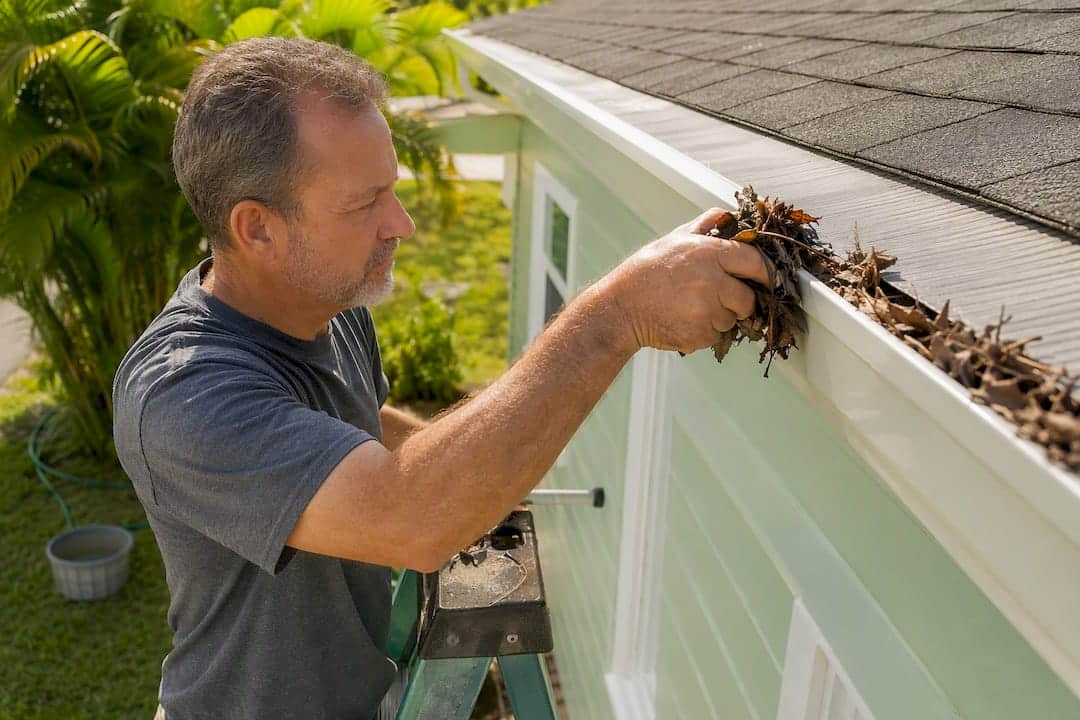
Even a well-designed gutter system stops helping when it is full of debris. Florida homes deal with leaf litter, seed pods, roof grit, and storm-blown mess through much of the year. UF/IFAS materials note that gutters and downspouts need maintenance because debris contributes to drainage problems. That is not a side issue. It is central to whether your system actually protects the yard.
A clogged section can overflow like a waterfall in one small spot, which often creates worse washout than having no gutter at all along that run. A loose downspout can dump water straight at the foundation. A sagging section can hold standing water and reduce flow during the next storm. These are ordinary failures, and they usually appear gradually.
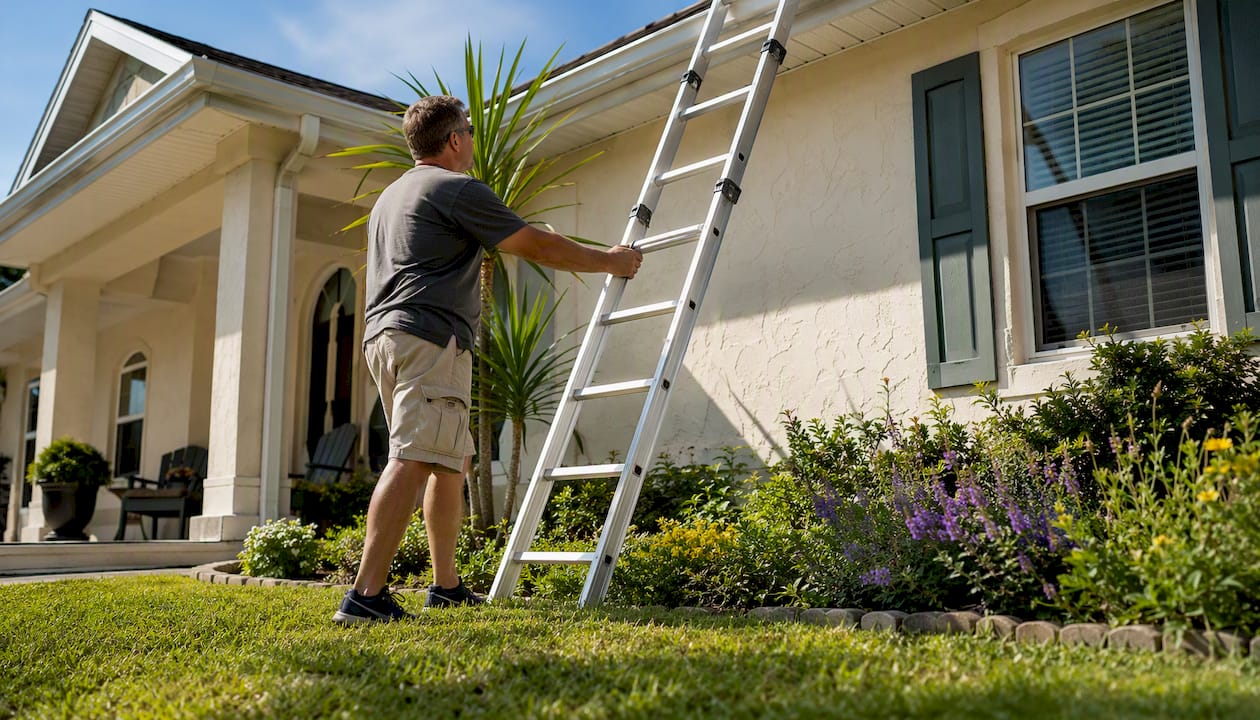
This is where the question of DIY gutter cleaning or hire a pro comes up. The answer depends on the house, the roofline, and your comfort on a ladder. For a low, simple run that is easy to access, some homeowners handle basic cleaning themselves. On taller homes, steeper rooflines, or properties with repeated clogging and overflow, professional service is often the safer route. The point is not who does the cleaning. The point is that neglected gutters stop being a protective system and start acting like a leak at the edge of your roof.
If you have ever searched terms like gutter cleaning Dunnellon FL or gutter repair Hawthorne FL, you have probably seen how often maintenance and small repairs come up together. That is because cleaning reveals problems. People discover a separated joint, a loose fastener, or a downspout pulling away from the wall only when someone clears the system and watches how it drains.
Gutters should fit the roof, not just the budget
Different roof types shed water differently, and that affects how gutter systems perform. Homeowners comparing gutters for metal roofs Florida properties often notice that runoff can move quickly off smooth roof surfaces. The takeaway is not that one roof type is a problem and another is not. It is that gutter sizing, placement, and discharge planning need to suit the roof’s drainage behavior.
The same basic thought applies whether the home has conventional roofing or metal. Roof geometry influences how much water reaches a given section of gutter and how concentrated the flow becomes at valleys and corners. That is one reason broad pricing claims are not very useful. Real gutter installation cost factors Florida homeowners should think about include the layout of the roof, the number of corners and downspouts needed, access around the house, and whether the system must be integrated around features like lanais or pool enclosures.
I would be careful about anyone who talks price before talking water movement. If a contractor does not ask where the runoff should go after it leaves the downspout, you are not having the right conversation yet.
Pool cages and outdoor living areas complicate drainage
Homes with screened enclosures or pool areas often need a little more planning. Gutter drainage for pool cages is not just a convenience issue. Poorly managed runoff near those spaces can create muddy transitions, splash onto deck areas, and erode narrow strips of soil between structures and fencing.
UF/IFAS guidance on outdoor living and water management points toward the same practical concern: roof runoff should be handled carefully so it does not create messy overflows or erosion around active-use areas. Around a pool cage, there may be fewer easy places to discharge water because paved surfaces, screening, and traffic patterns limit your options. In those cases, the layout of downspouts becomes more important. You want to preserve access and keep water moving to a pervious area without turning walkways into splash zones.
This is also where routine observation pays off. After a summer storm, walk the perimeter of the enclosure and look for sand deposits, mulch movement, or puddles where deck meets planting bed. Those clues usually show whether a downspout is concentrating too much water in the wrong place.
Seamless systems, repairs, and the value of good fit
Some homeowners considering replacements ask about seamless gutters Williston FL style providers advertise in nearby markets. The appeal is easy to understand. Fewer seams can mean fewer potential leak points along long runs. But even a seamless system still depends on sound installation, proper pitch, and effective downspout placement. Seamless does not mean maintenance-free, and it does not automatically fix a bad drainage plan.
Repair work matters just as much. If a section is pulling away, leaking at a corner, or overflowing because the pitch is off, repair may restore performance without a full replacement. Searches like gutter repair Hawthorne FL reflect a common reality across Florida towns: small defects can produce outsized drainage problems. A joint that leaks steadily onto one flower bed during every storm may be all it takes to create washout over time.
The best approach is to judge the system by how it handles water in real conditions. During or right after a strong rain, watch for overflow, splashback, or discharge points that dig into find out more the soil. Those observations tell you more than a sales brochure ever will.
Color, appearance, and the HOA question
Homeowners do care how gutters look, and that is reasonable. Gutters are visible on the house every day. The good news is that choosing practical drainage does not mean ignoring appearance. Gutter colors for Florida homes often become part of the discussion because bright sun, exterior trim, and roof color all affect how noticeable the system feels.
If you live in a community with an HOA or architectural review process, appearance standards may apply to exterior elements. Florida law gives associations authority over exterior appearance standards, including color and style specifications for certain protective exterior products, though those standards still have to comply with the building code and cannot be used to deny conforming installations outright. The practical takeaway is simple: check your community rules before ordering a visible exterior color, but do not let cosmetic review distract from proper drainage design.
A gutter that blends nicely with the fascia but sends water into a washout trench is not a success. Function comes first, then finish.
What homeowners often get wrong
There are a few gutter myths Florida homeowners run into again and again. One is the idea that if your yard is sandy, water always soaks in fast enough and gutters are optional. Sometimes sandy soil absorbs well, but intense roof runoff can still outrun infiltration and scour the surface before soaking occurs. Another myth is that once gutters are installed, the job is done forever. In Florida’s mix of storms, humidity, and debris, maintenance remains part of the picture.
A third misunderstanding is that any place farther from the house is automatically a good place for discharge. Not necessarily. If water is sent onto a compacted path, a low muddy corner, or the edge of a hardscape, you may simply relocate the problem. The better standard is absorption and stability, not just distance.
The last myth worth clearing up is that guards eliminate all upkeep. Products marketed under searches such as gutter guards Mount Dora FL can reduce some debris entry in some situations, but they do not erase the need to inspect the system. Water still has to move through the gutter and out the downspout as intended. If you add guards, treat them as a maintenance aid, not as permission to stop paying attention.
A practical inspection routine for Florida weather
You do not need a complicated system to stay ahead of washout. You do need consistency. A year-round gutter checklist Florida homeowners can actually follow is usually better than an ambitious plan they ignore after June.
- Check the house after the first few major summer storms and look for overflow marks, soil grooves, and displaced mulch.
- Inspect downspout discharge areas for pooling, soft spots, and new erosion after tropical weather.
- Clear debris when buildup starts affecting flow, especially in tree-heavy areas.
- Recheck attachment points and visible joints during the wetter months, when failures show up fastest.
- Walk the perimeter again in the drier season to see whether bare spots need regrading, mulch, or planting support.
That simple routine catches most of the problems before they become expensive landscape repairs.
When landscaping should be part of the fix
Sometimes gutters alone are not enough. If the ground around the house is already worn down, compacted, or poorly shaped, the gutter system needs support from the landscape. Florida-friendly guidance encourages keeping runoff on site through turf, planted areas, rain gardens, or collection systems such as rain barrels and cisterns. That broader view matters because water needs a destination, not just a route.
A planted bed can help slow runoff if it is stable and well covered. Turf can absorb and spread water if the grade is gentle and healthy. A rain garden can make sense where runoff repeatedly gathers and the site can be designed to infiltrate rather than pond against the house. Even a rain barrel can reduce immediate surge from a downspout, though the larger drainage pattern still has to work when the barrel is full or bypassing.
The key is to treat gutters and landscape as one system. When they work together, the yard stays cleaner, the beds hold their shape, and the house perimeter looks cared for rather than carved up by every storm.

The smartest mindset for Citra homeowners
The best gutter decisions usually come from watching your own property closely. Every lot has its quirks. One side gets hammered by afternoon rain. One corner collects roof flow from two sections. One downspout empties near a walkway and creates splash every time. Once you see those patterns, the fixes become more obvious.
For a Citra homeowner trying to reduce soil washout, the goal is not perfection. It is control. Catch the roof runoff, move it away from the house, and direct it into pervious areas that can absorb it without erosion. Keep the system maintained, because even a good design fails when debris and small defects build up. And if your yard includes features like pool enclosures, heavily mulched beds, or long roof runs, give the drainage path extra thought before the next storm season tests it.
That is what gutters are really for here. Not decoration, not habit, and not because every house has them. They are one of the simplest tools you have to keep rain from reshaping the ground around your home one thunderstorm at a time.